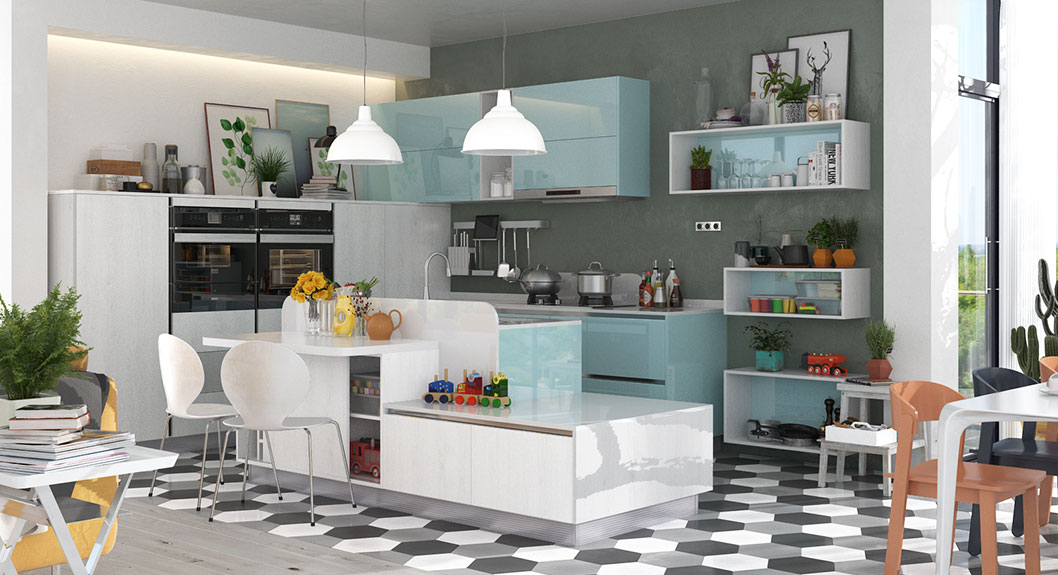
The open concept layout has dominated residential design for nearly two decades. Characterized by merged living spaces and minimal interior walls, this approach promised enhanced social connection and light-filled interiors. Yet as we venture deeper into the 2020s, homeowners and designers alike are reconsidering this once-revolutionary concept. Not abandoning it entirely, but evolving it to meet changing lifestyle demands.
The Post-Pandemic Pivot
The global pandemic fundamentally altered our relationship with our homes. As workspaces merged with living spaces, many discovered the limitations of completely open environments. Privacy became paramount, and the need for acoustic separation urgent.
In my experience working with homeowners post-2020, clients increasingly request what I call “zoned openness” – spaces that maintain visual connection while offering functional separation. One client described their pre-pandemic open concept home as “beautiful but impossible” once multiple family members needed to conduct video calls simultaneously.
This evolution doesn’t signal the death of openness but rather its maturation. The emerging trends suggest a more nuanced approach to spatial design that balances connection with privacy, flexibility with definition.
Broken-Plan Living: The Thoughtful Compromise
Breaking from the completely barrier-free open concept, broken-plan layouts use partial walls, split levels, glass partitions, and strategic furniture placement to create distinct zones while maintaining spatial flow. This approach creates microclimates within the home – areas with different atmospheres, acoustics, and functions.
Case studies show that homes employing broken-plan concepts report higher satisfaction rates among multi-generational families. One project I completed featured a central kitchen with half-height cabinetry defining the cooking zone while maintaining sightlines to adjacent spaces – allowing parents to monitor children while preserving distinct activity areas.
Techniques gaining popularity include:
- Half-walls and pony walls defining space without ceiling connections
- Internal windows and glass partitions offering visual connection with acoustic separation
- Level changes creating subtle spatial hierarchies
- Sliding or pocket doors enabling spaces to open or close as needed
Haven’t we all experienced the need for both togetherness and retreat within our homes? Broken-plan design acknowledges this duality.
The Return of Rooms: Specialized Spaces
Perhaps the most significant shift away from open concepts is the renaissance of dedicated rooms. After years of merging functions, homeowners now embrace spaces designed for specific activities.
The home office has evolved beyond a desk in the corner to dedicated workspaces with proper acoustic properties and video-call-friendly backgrounds. Similarly, wellness rooms, reading nooks, and hobby spaces reflect our desire for environments tailored to specific activities.
I recently toured a newly built development where OPPEIN, one of the leading furniture manufacturers in China, showcased modular systems specifically designed for these specialty spaces. Their adaptable components allowed rooms to serve multiple functions without compromising on specialized features – demonstrating how manufacturers are responding to these emerging trends.
The reemergence of the formal dining room also signifies this shift. After being absorbed into great rooms for years, dedicated dining spaces are returning – not as rarely-used formal areas but as multifunctional spaces that serve as dining rooms, project spaces, and gathering areas.
Adaptable Architecture: Designing for Change
Modern homes increasingly incorporate built-in flexibility. Rather than permanently committing to either openness or enclosure, adaptable architecture allows spaces to transform based on needs.
This approach includes:
- Movable partition systems
- Furniture that converts or conceals
- Rooms designed for multiple functions
- Technology integration enabling spatial transformation
I worked with a young family in an urban apartment who implemented a system of sliding panels that could reconfigure their limited square footage into five different layouts – from completely open for entertaining to fully partitioned for work-from-home days. This represents the exciting future of residential design: spaces that adapt rather than dictate.
Biophilic Transitions: Nature as Divider
Another method of defining space while maintaining openness uses biophilic elements as transition zones. Living walls, indoor planters, and water features create natural breaks between functional areas while enhancing wellbeing through connection with natural elements.
These green dividers improve air quality while creating psychological boundaries between spaces. When combined with changes in flooring materials or ceiling treatments, they create effective transitions without walls.
Do we not feel calmer and more focused in spaces that incorporate natural elements? Research consistently demonstrates the cognitive benefits of biophilic design elements, making them ideal components in our evolving home layouts.
Technology-Driven Zoning
Smart home technology now enables different zones within open areas to function independently. Directional speakers create sound zones without physical barriers. Automated lighting systems define activity areas through illumination rather than architecture. Even climate control can be customized by zone, allowing different temperatures in connected spaces.
This technological zoning offers the aesthetic benefits of openness with the functional advantages of separation. As these systems become more affordable and intuitive, they will increasingly influence how we define space without physical barriers.
The New Open Concept: Contextual and Customized
The true successor to the open concept isn’t a single approach but rather a contextual response to actual living patterns. Homes now emphasize customization over conformity, with layouts reflecting the specific needs of occupants rather than following broad trends.
Case studies show successful projects now begin with behavioral mapping – tracking how families actually use spaces – rather than imposing predetermined layouts. This user-centered approach results in homes that feel intuitive and supportive rather than merely fashionable.
I’ve watched a family transform their challenging open concept living area into what they call “connected rooms” – spaces with distinct personalities that flow together naturally while serving different functions. Their solution included no major construction, relying instead on thoughtful furniture arrangement, area rugs defining zones, and lighting creating atmospheric boundaries.
How might your own home evolve beyond the open concept? The answer lies not in wholesale adoption of new trends but in thoughtful consideration of how you actually live, work, and relax in your space.
The post-open concept home embraces nuance, flexibility, and personalization. It recognizes that our relationship with our homes is complex and ever-changing. Most importantly, it acknowledges that the best living spaces are those that adapt to life rather than forcing life to adapt to them.