Table of Contents
- The Vasari Corridor: A Hidden Passage Reopens
- Depositi Musei Civici Fiorentini: Unveiling Hidden Artworks
- Palazzo Vecchio: Exploring Hidden Passages
- Florence’s Street Art: A Modern Twist
- Santa Maria Novella Pharmacy: A Historic Shopping Experience
- Giardino Bardini: A Serene Escape
- Conclusion
Key Takeaways
- Discover the storied past and recent transformation of the Vasari Corridor, now open to the public.
- Discover the once-hidden masterpieces of the Depositi Musei Civici Fiorentini.
- Unravel the secrets within the historic walls of Palazzo Vecchio.
- Experience Florence’s burgeoning street art movement for a fresh perspective.
Florence captivates visitors with its seamless blend of artistic mastery and architectural innovation, embodying the spirit of the Renaissance. While icons like the Duomo and the Uffizi Gallery draw global attention, the real essence of Florence is discovered in its secrets—hidden corridors, unexplored collections, and a vibrant pulse of modern art. For those eager to experience these wonders firsthand, local Florence city tours offer expert-led explorations into the city’s most enchanting yet lesser-known treasures, unlocking stories that the casual tourist might easily miss.
Nestled along the Arno River, Florence’s quiet courtyards, secret passageways, and contemporary art corners tell tales of innovation and intrigue. Beyond postcard-perfect views and grand piazzas lies a fascinating tapestry woven from centuries of creativity, power, and passionate artistry.
The Vasari Corridor: A Hidden Passage Reopens
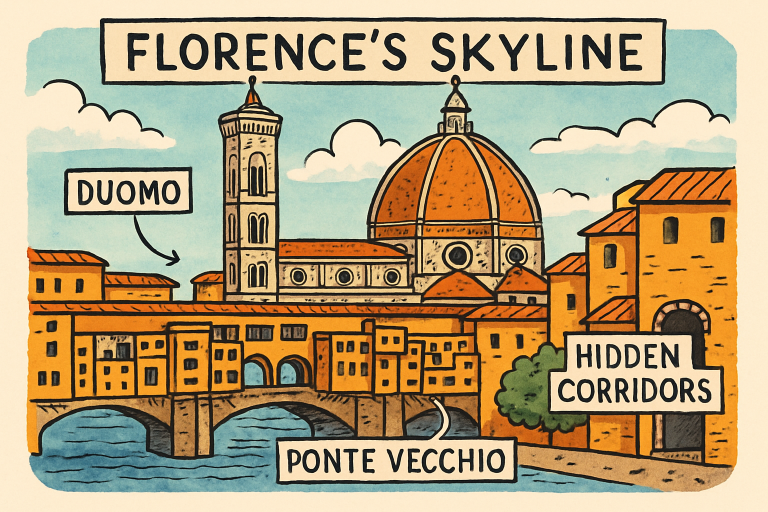
Few city features encapsulate Florence’s intrigue like the Vasari Corridor, a 16th-century passageway rediscovered by modern visitors after meticulous restoration. Commissioned by Cosimo I de’ Medici, the corridor was designed by Giorgio Vasari to allow the Medici family safe, private passage between the Uffizi Gallery and the Pitti Palace. Today, it’s one-of-a-kind elevated route not only threads through Florence’s skyline but also serves as a gallery space studded with historical portraits and rare views of the Arno and Ponte Vecchio. Recent renovations have opened this once-exclusive path to the public, complete with accessible infrastructure for all. Learn more about the Vasari Corridor’s reopening to plan your visit through this atmospheric slice of Florentine history. Don’t miss the chance to walk in the footsteps of dukes and dignitaries while enjoying a unique vantage point over the city. Whether you’re a history buff or an art lover, the Vasari Corridor offers an unforgettable perspective on Florence’s layered past.
Depositi Musei Civici Fiorentini: Unveiling Hidden Artworks
Often, Florence’s artistic treasures aren’t just on the walls of its famed galleries. In January 2024, the Depositi Musei Civici Fiorentini—Florence’s civic museum storage facility—was unveiled to the public for the first time. Located in the heart of the Santa Maria Novella complex, this innovative space showcases over 4,000 previously stored artworks, rotating selections from modern artists such as Lucio Fontana and Giorgio Morandi. Works that spent decades shielded from the public eye now contribute to a richer, more inclusive portrayal of Florence’s evolving creative story. This collection represents an ongoing dialogue between the Florentine past and its progressive present. Read more about the Depositi Musei Civici Fiorentini and its groundbreaking approach to public art access. The initiative also underscores Florence’s commitment to democratizing culture and broadening public engagement with its artistic heritage. As interest grows, the Depositi is quickly becoming a must-visit destination for both art enthusiasts and curious travelers alike.
Palazzo Vecchio: Exploring Hidden Passages
Palazzo Vecchio stands at the crossroads of Florence’s civic and secret histories. Behind its imposing stone façade lies a labyrinth of hidden stairways and clandestine chambers. The Stairway of the Duke of Athens is just one of several passages designed for escape and intrigue, a relic of the palace’s turbulent political past. Within the palazzo’s walls, the Tesoretto served as a private treasury while the Studiolo, shrouded in esoteric symbolism, was a retreat for the Medici rulers’ contemplation and alchemical experiments. These rooms provide not only a backdrop to the Medici’s rise but also a window into the city’s enduring appetite for mystery and power.
Florence’s Street Art: A Modern Twist
Florence’s creative heart beats just as strongly in its modern districts, where street art colors a city famed for its classical palettes. Wander down Via Toscanella and through Piazza della Passera to encounter a vibrant alternative to the city’s Renaissance grandeur. Artists like Clet Abraham have reimagined urban fixtures, transforming traffic signs into playful and provocative statements, while walls become giant canvases for contemporary commentary. This movement proves Florence’s artistry is ever-evolving, honoring its past while bravely navigating the present. These neighborhoods present a delightful contrast to the city’s opulent galleries, and their open-air exhibitions encourage all to see Florence with fresh eyes.
Santa Maria Novella Pharmacy: A Historic Shopping Experience
No exploration of Florence’s hidden history is complete without a visit to the Santa Maria Novella Pharmacy—one of the world’s oldest still-operating pharmacies, founded in 1221. Within its atmospheric, frescoed halls, you’ll find fragrant soaps, luxurious skincare blends, and perfumes crafted from centuries-old formulas. This apothecary is not only a shopping destination but an immersion in Florentine tradition, where every bottle and scent tells a centuries-spanning story worthy of its Renaissance neighbors.
Giardino Bardini: A Serene Escape
Florence’s panoramic views are legendary, yet the Giardino Bardini remains a serene, secret haven for those who venture off the beaten path. This terraced garden invites visitors to stroll through wisteria-covered walkways, linger among sculptures, and savor unrivaled cityscapes away from the crowds. Its blooming flora and gentle quietude contrast beautifully with the energy of Florence, making it an essential retreat for those seeking beauty and tranquility.
Conclusion
Florence’s magic resides in its layers—architectural marvels, guarded secrets, and the ever-present pulse of artistic renewal. Venture beyond the obvious, and you’ll discover a city that rewards curiosity. From the Vasari Corridor’s lofty vantage point to the bold murals of Oltrarno, Florence’s treasures reveal themselves to those willing to explore its hidden dimensions. Each journey through these storied corridors and vibrant neighborhoods reveals a piece of the city’s soul, inviting every traveler to participate in its timeless narrative.