



Clear vision affects how you work, drive, read, and stay safe. When you sit in the exam chair, the tools and bright lights can feel confusing. You deserve to know what each test is checking and why it matters for you. This blog explains three core vision tests your eye doctor uses to measure how sharp your sight is and to spot early warning signs of disease. Each test looks at a different part of how you see. Together, they help your doctor catch small changes before they turn into bigger problems. This is true whether you wear glasses, contacts, or think your vision is fine. It is also true if you are already facing issues like glaucoma treatment Austin or diabetes. When you understand these tests, you can ask better questions, stay calm during exams, and protect your eyesight with more confidence.
Why these three tests matter for you and your family
You use your eyes every waking hour. You depend on clear sight to care for children, support older parents, and keep yourself safe on the road. You may wait for clear pain before you worry about your eyes. Your eyes often stay quiet even when damage starts. These three tests help catch trouble early. Early care can prevent vision loss and keep daily life steady.
Federal health experts stress regular eye exams for adults and children. The National Eye Institute explains that many eye diseases show no warning signs at first. These tests give you a way to see what is really happening inside your eyes, not just what you feel.
Test 1: Visual acuity test with the eye chart
This is the test you expect. You sit in a chair and read letters on a chart across the room. The chart may be on the wall or inside a screen. Each line has smaller letters. You cover one eye, read, then switch eyes.
This test shows how clearly you see at a set distance. You often see a result like 20/20 or 20/40.
- 20/20 means you see at 20 feet what a person with standard vision sees at 20 feet.
- 20/40 means you must be 20 feet away to see what a person with standard vision sees at 40 feet.
- Worse than 20/40 can affect driving, reading, and work tasks.
This test helps your doctor decide if you need glasses or a new prescription. It also helps track changes over time. A slow shift from 20/20 to 20/40 may signal strain, aging, or another problem that needs attention.
Test 2: Refraction test to find your prescription
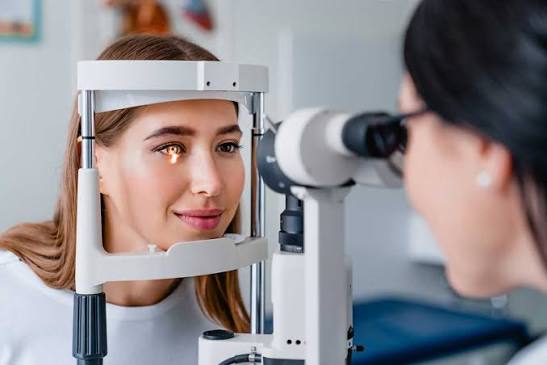
The refraction test usually comes right after the eye chart. You look through a large device with many lenses. Your doctor flips lenses and asks which one looks clearer. You may hear “one or two” many times. This can feel tiring. Your answers still guide the result.
This test measures how light focuses on the back of your eye. It helps find three common vision problems.
- Nearsightedness. You see near objects clearly, but far objects look blurry.
- Farsightedness. You see far objects more clearly than near work.
- Astigmatism. Your eye shape bends light unevenly. Lines can look stretched or blurry.
The refraction test gives your exact numbers for glasses or contact lenses. It also helps your doctor see if your eyes change faster than expected. Sudden shifts can point to health issues like diabetes or medication side effects.
Test 3: Eye pressure test for silent damage
The eye pressure test checks the fluid pressure inside your eye. High pressure can slowly damage the optic nerve. That nerve sends images from your eye to your brain. Damage here can cause glaucoma. Glaucoma can steal side vision without pain.
Your doctor can measure eye pressure in more than one way.
- A puff of air test. You place your chin on a rest. A quick air puff hits your eye. A sensor reads the eye response.
- A gentle touch test. Your doctor uses drops to numb the eye. A small tool lightly touches the eye surface to read pressure.
The test is quick. It can feel strange. It should not hurt. The MedlinePlus glaucoma overview explains that eye pressure checks are key to finding glaucoma early. Early care can protect vision for many years.
How the three tests work together
Each test looks at a different part of your sight. Together, they show a fuller picture. The table below gives a simple comparison.
| Test | What it measures | What it can find | What you experience |
|---|---|---|---|
| Visual acuity | How clearly you see letters at set distances | Blurry distance or near vision that affects daily tasks | Reading letters on a chart with one eye covered |
| Refraction | Exact lens power your eyes need | Nearsightedness, farsightedness, astigmatism | Looking through lenses and choosing which looks clearer |
| Eye pressure | Fluid pressure inside the eye | Risk of glaucoma and optic nerve damage | Short air puff or light touch on a numbed eye |
What these tests mean for children and older adults
Children often do not complain about poor vision. They may think blurry words on the board are normal. These three tests help find problems that affect reading and learning. Clear vision supports school success and safer play.
Older adults face a higher risk of glaucoma and other eye diseases. Vision can drop slowly. You may only notice when you trip more, miss steps, or struggle with night driving. Regular testing can catch changes before accidents or permanent loss.
How often should you get these tests
Your needs depend on your age, health, and family history. As a general guide:
- Children should have eye checks at key growth stages and before school.
- Adults under 40 should have regular exams, even with no symptoms.
- Adults 40 to 60 should test more often, especially with a family history of eye disease.
- Adults over 60 should have frequent exams to watch for glaucoma, cataracts, and macular problems.
If you have diabetes, high blood pressure, or a history of eye injury, your doctor may want to see you more often. If you already receive care such as glaucoma treatment in Austin, you should follow your specialist’s schedule closely.
How to use your test results
You have a right to clear answers about your eyes. During your visit, you can:
- Ask your doctor to explain each test and result in plain words.
- Request a copy of your prescription and test numbers.
- Write down any changes from your last visit.
You can also ask direct questions.
- Is my vision stable, better, or worse than last time
- Do these results raise my risk for glaucoma or other disease
- What can I do at home to protect my sight
Taking the next step to protect your sight
Your eyes carry you through work, school, and every quiet moment at home. These three tests are simple tools. You can use them to guard something you cannot replace. When you keep up with regular exams and understand these tests, you give yourself and your family a stronger chance at clear sight for many years.